No single board is best for every application. A responsible specification considers location, moisture exposure, span, finish, hardware and budget before selecting the core material.
MDF for smooth, refined finishes
Medium-density fibreboard has a consistent surface that works well with paint, veneer and many decorative finishes. It is frequently used for detailed doors and interior panels when the correct grade and edge protection are specified.
Plywood for structural performance
Plywood is built from layered veneers, giving it useful strength and screw-holding characteristics. Grade, face quality, adhesive type and thickness vary, so the exact product should match the load and environment.
WPC for selected moisture-prone areas
Wood-plastic composite boards can be valuable in applications where moisture resistance is a priority. Their weight, fastening method, surface finish and thermal behaviour should still be evaluated rather than treating WPC as a universal substitute.
Specify the complete system
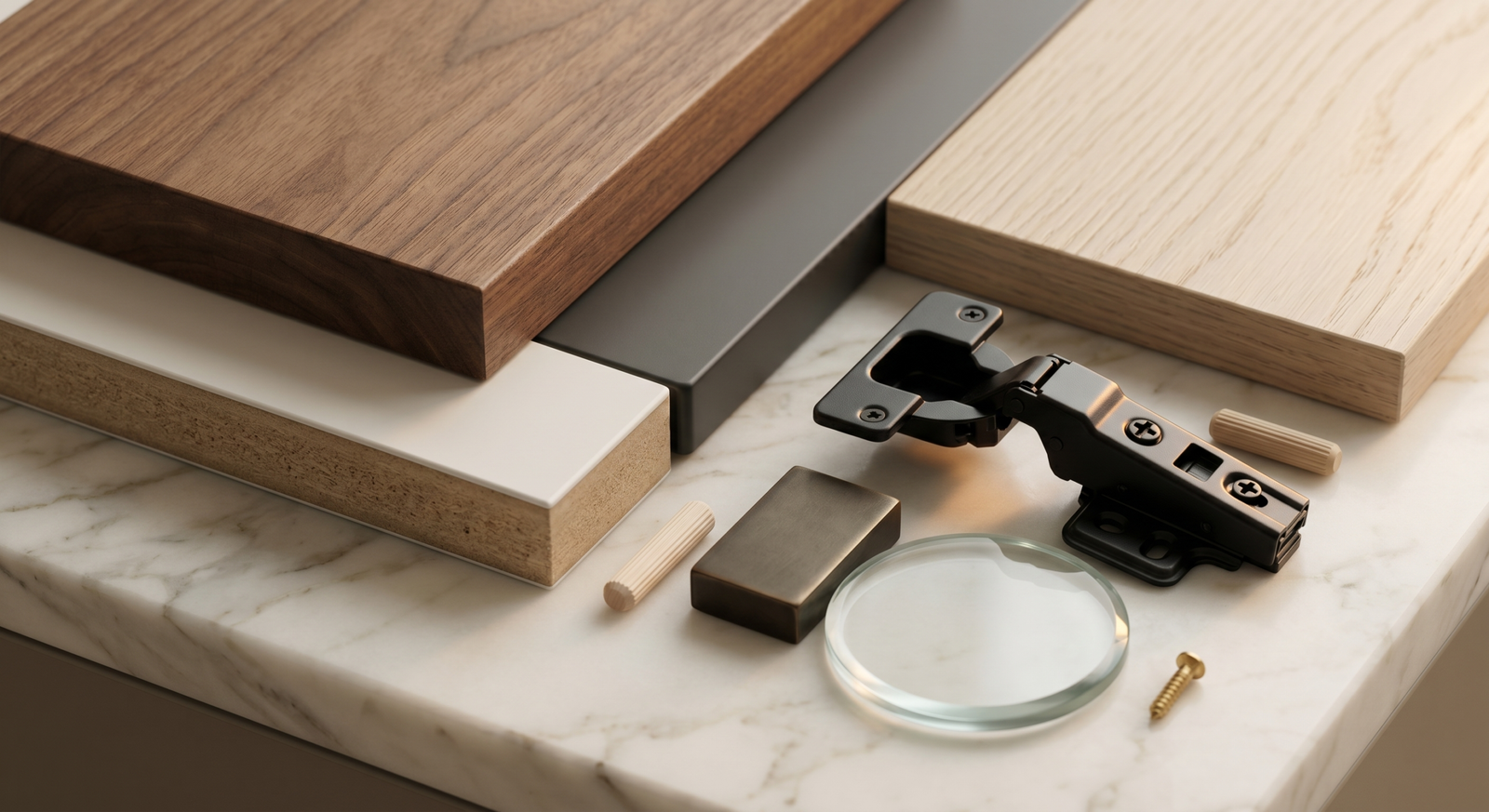
The core is only part of the result. Laminate, veneer, paint, edge banding, backing, hardware and installation details affect durability. ECC reviews these layers together and can prepare physical samples before manufacturing begins.